
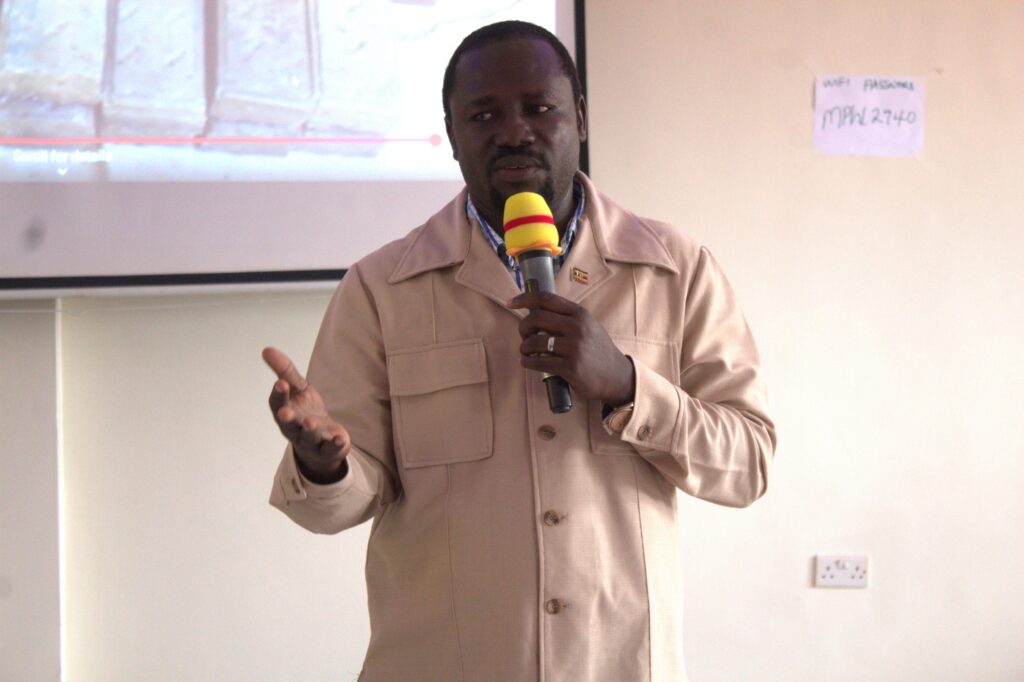
An economist, and Director, Uganda National Chamber of Commerce and Industry (UNCCI) – Lira City and Lango Chapter
The presentation of Uganda’s FY2026/27 National Budget marks more than another annual government expenditure plan. Moreover, it’s the first year of the implementation of the NRM Manifesto after the NRM government was voted back for 2026-2031 governance term. It represents a strategic blueprint for the next phase of Uganda’s economic transformation and offers important lessons for regions, businesses, farmers, investors, and communities across the country.
With a budget of approximately UGX 84.39 trillion, Government has made one message abundantly clear: the future belongs to producers, innovators, investors, exporters, and value creators.
The Budget theme, “Full Monetisation of Uganda’s Economy through Commercial Agriculture, Industrialisation, Expanding and Broadening Services, Digital Transformation and Market Access,” signals a decisive shift from simply growing the economy to ensuring that every household, enterprise, and region actively participates in wealth creation.
For the Lango Sub-region, this Budget should not be interpreted merely as a list of allocations. It should be viewed as a wake-up call and a strategic opportunity.
Uganda is entering a new economic phase
Uganda’s economy is projected to grow from 6.4 percent this financial year to an impressive 10.2 percent in FY2026/27, driven largely by the commencement of commercial oil production, expanding exports, increased private sector investment, and continued infrastructure development.
Exports have reached over USD 18 billion, remittances from Ugandans abroad have grown to USD 2.8 billion, and foreign direct investment now stands at USD 3.2 billion.
These figures tell an important story. Uganda’s future growth will increasingly depend on production, exports, industrialization, technology, and regional trade rather than domestic consumption alone.
Government is effectively repositioning itself as a facilitator of growth while placing greater responsibility on the private sector to create jobs, expand industries, and generate wealth.
The biggest winners are productive sectors
The largest beneficiaries of this Budget are not necessarily specific districts or regions but sectors capable of generating income, exports, and employment.
Agro-industrialization received a record allocation of UGX 2.26 trillion, making it one of the most significant winners in the Budget. Government is moving beyond supporting agricultural production and is now prioritizing irrigation, mechanization, storage, processing, certification, and market access.
This is a fundamental shift.
The era when regions could prosper by simply producing raw agricultural commodities is rapidly ending. Future competitiveness will depend on the ability to process, package, brand, and export value-added products.
Similarly, Government has allocated substantial resources to tourism, manufacturing, innovation, digital transformation, and industrial development. These sectors are expected to drive the next generation of jobs and enterprise growth.
What does this mean for Lango?
Although Lango did not receive major flagship investments such as oil infrastructure, international airports, or special economic zones, the Budget strongly favours sectors where the region enjoys significant comparative advantages.
Lango remains one of Uganda’s most productive agricultural regions. The sub-region has vast potential in grain production, oilseeds, livestock, coffee, fisheries, and agro-processing.
Government’s continued support for coffee expansion in Northern Uganda, livestock restocking in Lango, Acholi, and Teso, and investments in transmission infrastructure such as the Lira-Gulu-Agago power line provide a foundation for future industrial growth.
The rehabilitation of the Tororo-Gulu railway corridor also creates opportunities to position Lira City as a strategic logistics, aggregation, and distribution hub serving Northern Uganda, South Sudan, West Nile, Karamoja, and Eastern Democratic Republic of Congo.
The question is whether Lango is prepared to seize these opportunities.
The real risk facing Lango
The greatest risk facing Lango is not the absence of government investment. The greatest risk is failing to organise around emerging economic opportunities. Many of the regions attracting major investments today spent years preparing. They developed investment strategies, established industrial zones, strengthened value chains, attracted investors, and built institutions capable of supporting growth.
Lango cannot afford to remain a supplier of raw materials while other regions capture the benefits of processing, manufacturing, logistics, and exports.
Every year, thousands of tonnes of maize, soybeans, sunflower, cassava, rice, and livestock products leave the region with minimal value addition. This means jobs, profits, and tax revenues are created elsewhere. Unless deliberate action is taken, this pattern will continue.
The private sector must lead
One of the strongest messages emerging from the Budget is that Government expects the private sector to drive economic transformation.
The continued capitalization of the Uganda Development Bank, Agricultural Credit Facility, Parish Development Model, Emyooga, GROW Project, and other financing programmes provides substantial opportunities for businesses and cooperatives.
However, access to financing alone is not enough.
The region requires bankable projects, investment-ready enterprises, strong producer organizations, modern storage infrastructure, processing facilities, and export-oriented businesses.
Private sector actors must begin thinking beyond trading and embrace manufacturing, agro-processing, logistics, tourism, technology, and industrial development.
A new development agenda for Lango
The Budget highlights several strategic areas where Lango can build a competitive advantage.
First, the region should pursue a comprehensive agro-industrialization agenda centred on grain processing, edible oils, animal feeds, dairy products, livestock value chains, and export-oriented agribusiness.
Second, Lira City should position itself as Northern Uganda’s logistics and commercial hub, leveraging ongoing transport and energy investments. Perhaps the greatest opportunity emerging from the budget is Lira City’s strategic geographical position. Located at the intersection of major trade corridors linking West Nile, Acholi, Karamoja, Teso, South Sudan, and Eastern Democratic Republic of Congo, Lira has the potential to become Northern Uganda’s leading commercial and logistics centre.
As Government continues investing in transport infrastructure and railway connectivity, businesses should begin investing in:
• Commodity aggregation centres
• Export warehouses
• Distribution hubs
• Cold storage facilities
• Logistics parks
• Transport services
The future competitiveness of the region will depend largely on how effectively it connects producers to markets.
Areas of concern for Lango
While the budget offers opportunities, it also exposes areas where Lango remains relatively underrepresented.
The region did not secure major industrial city investment, special economic zones, airport infrastructure development, large-scale irrigation projects, or flagship manufacturing facilities comparable to those established elsewhere.
This should concern regional leaders. Without deliberate advocacy and strategic planning, Lango risks remaining a supplier of raw materials while other regions capture industrial and manufacturing investments.
The region must therefore strengthen its voice in national development discussions and present bankable proposals capable of attracting both public and private investment.
A Call for regional economic unity
The time has come for greater collaboration among cultural institutions, local governments, Members of Parliament, development partners, financial institutions, farmer cooperatives, youth organizations, women entrepreneurs, and the private sector.
Lango requires a shared economic vision.
Such a vision should prioritize:
• Agro-industrialization
• Industrial Park development
• An international airport
• Commercial agriculture
• Coffee expansion
• Livestock commercialization
• Regional trade both locally and globally
• Youth entrepreneurship
• Investment promotion
Development does not happen by chance. It happens when leaders and citizens organize around a common agenda and pursue it consistently.
Third, the region should aggressively promote coffee production and processing as a long-term export opportunity.
Fourth, stakeholders should invest in digital skills, innovation hubs, business incubation centres, and technology-driven enterprises capable of creating jobs for young people.
Fifth, cultural and heritage tourism should be developed around the rich history and cultural assets of the Lango people, supported by ongoing investments such as the Dokolo Museum and the future economic opportunities associated with Akii-Bua Stadium.
The time for action is now
The FY2026/27 Budget introduces what Government has termed the “Kisanja No More Sleep.”
This message applies equally to regions and communities.
The future winners in Uganda’s economy will not necessarily be those receiving the largest government allocations today. They will be those that organize around production, innovation, value addition, exports, and investment attraction.
Lango possesses fertile land, a strategic geographical location, expanding infrastructure, a growing urban centre in Lira City, rich cultural heritage, and a youthful population. These assets provide a strong foundation for economic transformation.
However, comparative advantages alone do not create prosperity. Vision, leadership, investment, coordination, and execution do.
Conclusion
The FY2026/27 Budget therefore presents a historic opportunity for Lango to reposition itself as Northern Uganda’s leading centre for agro-industrialization, logistics, trade, innovation, and enterprise development. The FY2026/27 National Budget is more than a statement of government spending. It is a roadmap showing where Uganda’s future economy will be built.
For Lango, the budget presents a choice. The region can continue exporting raw agricultural products and remain on the margins of national growth, or it can embrace agro-industrialisation, value addition, innovation, and private sector-led development.
The opportunities are real. The resources exist. The markets are expanding.
What is now required is vision, investment, coordination, and leadership.
If Lango aligns itself with the priorities reflected in this budget, the region has the potential to become one of Uganda’s most dynamic centres of agricultural commercialization, industrial growth, and private sector development over the next decade.
The challenge before us is not whether opportunities exist. The challenge is now whether we are prepared to seize them. Will we continue exporting opportunities, or will we begin creating wealth where it is produced?
The answer to that question will determine Lango’s economic future for decades to come.
Lango region must wake up: FY2026/27 budget opens new economic frontiers for Uganda
By Dr. Morris Chris Ongom